If this film is strange and unsettling, maybe it is because of the temporal disturbances. The final scene in
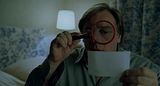
Uncle Boonmee Who Can Recall His Past Lives, in this regard, is not exceptional, but exemplary. Boonmee is dead. His family are in a hotel room after his funeral. A fundamental split in time occurs: they stay in the hotel room watching tv / they go to a bar to eat. Both events occur at the same moment. We must resist seeing this as simply some trick, a ruse, or joke. Or at least, not only a trick, a ruse, a joke. For to think this moment in-and-of-itself apart from the film as a whole (and indeed, as we will see, director Apichatpong Weerasethakul’s wider project of which
Uncle Boonmee is just one element) is to miss something far more essential...
In his
Cinema books, Deleuze names this kind of filmic organisation ‘peaks of the present,’ a film composed of chronosigns through which certain (inexhaustible) temporal strategies undo causality. Thus the question ‘can the present… stand for the whole of time?’ and the response ‘Yes, perhaps, if we manage to separate it from its own actual quality…’ – the quality of the present as now (C2:100)...
To read the full exploration of
Uncle Boonmee Who Can Recall His Past Lives through the Deleuze's sign of 'peaks of the present,' see
Deleuze's Cinema Books: Three Introductions to the Taxonomy of Images...






This is a brilliant, brilliant piece of analysis - just tweeted it out through my feed. Thank you. @thesnydes
ReplyDeleteSteven, many thanks... very kind of you...
ReplyDelete